Mars - the red planet
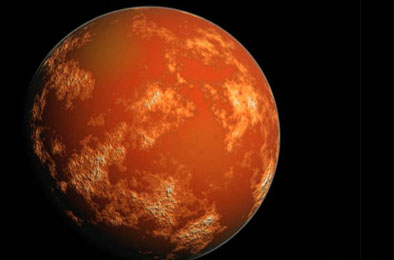
Mars has two moons: Phobos and Deimos (in Greek: "fear" and "horror"), they are small and have an irregular shape. Mars is a planet with the tenuous atmosphere. Its surface is reminiscent both of the impact craters of the Moon and the volcanoes, valleys, deserts and polar ice caps of Earth. Mars is the highest mountain peak in the solar system, Olympus. The period of rotation and the changing of the seasons on Mars resemble Earth much.
The atmosphere of Mars is extremely rare: its surface pressure is only 750 Pa (0.75%, i.e. less than 133 times the atmospheric pressure on Earth, measured at sea level). Martian atmosphere consists of 95% carbon dioxide, 3% nitrogen, 1.6% argon, and contains traces of oxygen and water. In 2003 during the observations from the Earth is surface and methane. The discovery was confirmed in March 2004 by the apparatus "Mars Express".
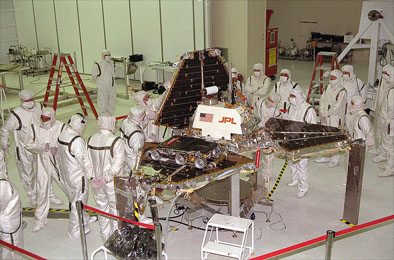
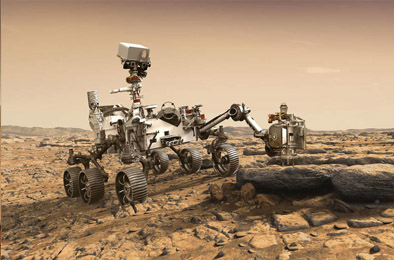
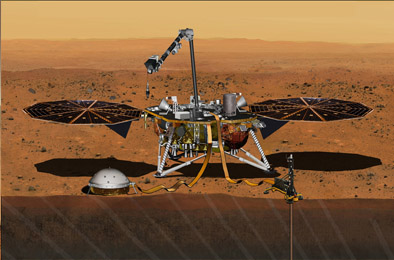
Mars has been studied by automatic devices which do orbital modules, spuskatelni modules and Rovers sent by space programs of the Soviet Union, the United States, Europe and Japan. Rovers NASA study the red planet on July 4, 1997.
Mars has been studied by automatic devices which do orbital modules, spuskatelni modules and Rovers sent by space programs of the Soviet Union, the United States, Europe and Japan. Rovers NASA study the red planet on July 4, 1997.
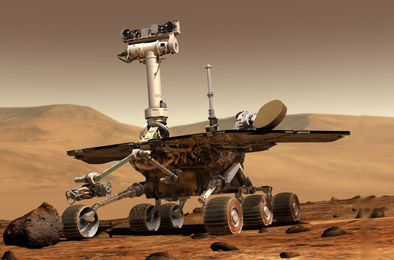
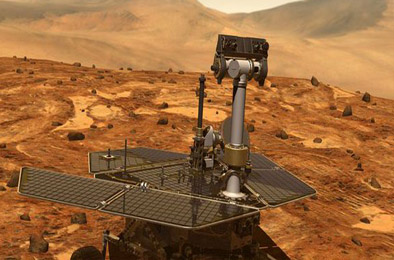
After the "Pathfinder" NASA sent eight other robot on Mars. "Spirit" and "Opportunity" landed in 2004, with the mission to find evidence of water. They made thousands of pictures of the rocky terrain and gathered data, which gave rise to the scientists to think that really ever there was water on Mars. "Spirit" ceased to function, but opportunity still works. Martian sunset showed the videotape to NASA. It is composed of images taken by the Rover opportunity.
„Kûriositi ", the largest and most modern Rover, landed in August 2012 year. It is equipped with 17 cameras, laser and probe, which collects samples in the hope to find rocks formed in water. One of the latest discoveries of the "Kûriositi" are evidence of an ancient Lake in the crater Gale.