At the dawn of cyborgs
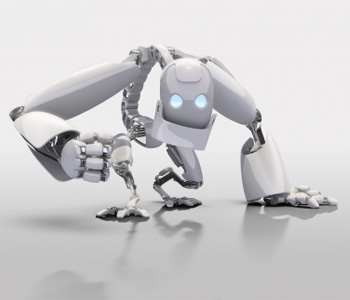
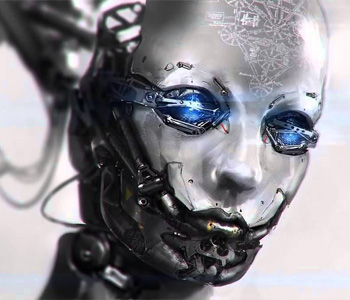
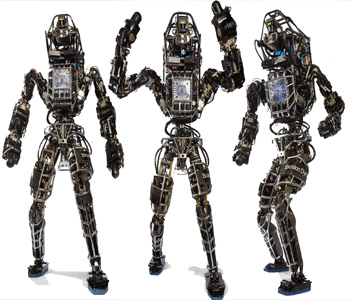
In movies and books, the most common idea we have received about cyborgs is this: the merging of a machine and a man, a mixture of computer brain and a body with sophisticated parts made specifically to form a superman. The true cyborg is semi-human-semi-robot, and according to science fiction in recent years, perhaps we are closer to their creation than we think - people with artificial eyes, ears, muscles, bones, organs can become an immutable part of the world later than 2030.
We connect with the world mainly through laptops, smartphones and tablets - or that is what the statistics look like. Reality, as we know it, is invariably related to technology. From a scientific point of view, it is not difficult to imagine the boundaries between man and machine deleted, and their merging and unity. Cyborg technologies are a fact and they are developing at such a rate that one begins to wonder if the merger of man and technology will soon make a new kind of people - unrecognizable, advanced, cyborgs.
The word cyborg comes from a cybernetic and an organism and has the same meaning as a bionic person - both concepts refer to a human being who lives with a body in which there are embedded technologies, making it stronger and more durable than everyone else. Normal human functions are improved by implanted and built-in parts, which can be hands, feet, eyes, and all the wonders of modern engineering. But no doubt, the "cyborgs" in our present are just people who have lost one limb and have taken advantage of the opportunity to get artificial - or soldiers dressing an exoskeleton before they go into battle.
At the end of 2013, the project of Berthold Meyer, a professor from Zurich, who created the so- Bionic Man - with over 70% human-like functionality, skin and blood, Bluetooth-controlled limbs, computer-controlled, and unbelievable dentures for the future. "Bionic Man," who stands at the doorstep of the future, where we walk in the street with cyborgs. But what do we have for the moment? Let is take a look at the most advanced dentures of the century, starting with DARPA denture, a targeted muscle reinnervention (TMR) project that allows a person to control their limbs only with thought - a technology that goes a long way in vision for the cyborg. Achievement is not easy - the prosthesis must be "built in" in the human, with doctors attaching the broken nerve endings of the arm to the various limbs of the limb.
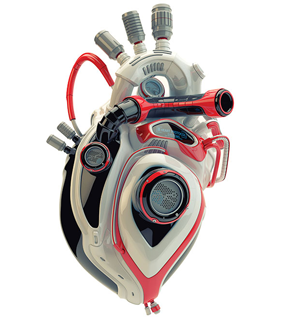
All people die one day - an unchanging fact of life. But is it not possible, through regenerative medicine, to reduce the rate of untimely death from renal, pulmonary or cardiac insufficiency significantly? Biotechnology now offers a transplant of artificial organs that replace the real ones. There are artificial hearts, but they are still an ancillary tool that can bolster the patient until a suitable transplant donor appears. Bionic kidneys are a fact, of which there are prototypes at Cleveland clinic in the US - they include thousands of nano-size filters that remove toxins from the blood quite similar to real kidneys. Bionic eyes are the "next big thing" - one eye of Bionic Vision Australia contains 98 electrodes that stimulate the nerves of the retina and simulate light, and that is enough for a blind person to move on alone, registering - larger objects around you. Other artificial organs such as the bladder, spleen, bile and lymphatic system are the goal of the work of many who through biotechnology want to achieve the amalgam of human being and technology.
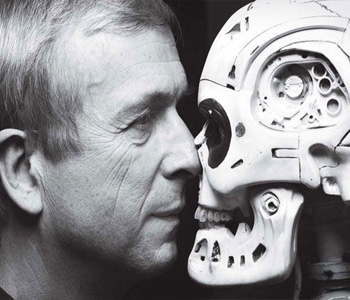
The creation of an artificial human brain is perhaps the most complex and the most fascinating issue that pundits cyboric scientists. The problem is that Artificial Intelligence and the overall architecture of the human brain must be perfected at the same time. The supercomputers grow up like mushrooms, every one better than the previous one, and everyone mimicking the work of the brain as fully as possible. Some contain up to 530 billion neurons, which, compared to the human brain, which has 86 billion neurons, is an impressive amount. But building such a neural network is not yet the same as creating a real artificial brain, ready to compete with the human, ie. there is still no way to get a machine to think like a man, to have the same ability to make complex connections. For the time being, it seems impossible to build an artificial brain, mostly because of the evidence that scientists using a 83,000 CPU supercomputer have managed to make only 1% of human brain activity. Separately, the moral question also arises: if a human cyborg with artificial limbs and body is involved with an artificial brain - is there any human part in it?